
Stainless Steel Specialists
Instrumentation Tubing
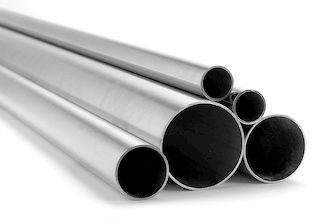
Stainless steel and corrosion-resistant alloys. OD 1/16" through 4" in bare, coiled, pre-insulated, and heat-traced multi-bundle configurations for instrument lines, pneumatic signal, and process sampling.
Standards: ASTM A269 · NACE MR0175
OD Range: 1/16"–4"
Configuration: Bare · Coiled · Pre-Insulated · Multi-Bundle
Overview
What We Stock
Instrumentation tubing connects pressure gauges, switches, transmitters, valves, and flow monitors to industrial piping, vessels, and process equipment. It differs from pipe primarily in how it’s specified — by outside diameter and wall thickness rather than nominal pipe size and schedule. Unified Alloys stocks instrumentation tubing in austenitic stainless steel across the standard OD range from 1/16″ through 4″, with wall thicknesses from 0.010″ through 0.148″. Common service grades — 304/304L and 316/316L — are deep stock; higher-alloy and non-stainless grades are partial stock or project-order.
Beyond bare tubing, the procurement story extends into pre-insulated and heat-traced assemblies. Pre-insulated bundles (Thermon ThermoTube) thermally protect process or sample lines without active heating. Heat-traced multi-tube bundles (Parker Parflex) combine process tubing with steam or electric trace cable and insulation in a single jacketed assembly — used for freeze protection, viscosity maintenance, and temperature control on analyzer, impulse, and instrument lines. For chemical service requiring polymer construction, Teflon tubing in PFA, FEP, and TFE variants is stocked alongside the metal range.
Tube supports, clips, and termination accessories are also stocked. See Pipe Supports, Hangers & Fasteners for the related support hardware range.
Custom wall thicknesses, non-stocked grades, and specialty configurations (PTFE-lined, sample-conditioning bundles, exotic alloy multi-bundles) are quoted on request. Lead times depend on configuration complexity and mill availability.
Key Applications
- Instrument and impulse lines for pressure transmitters, gauges, and switches
- Pneumatic signal lines and control loops
- Process sample lines including analyzer and CEM (Continuous Emissions Monitoring) systems
- Hydraulic and small-diameter process lines
- Steam supply and condensate return on instrument tracing systems
- Cryogenic and high-temperature sample lines
Materials & Grades
Available Materials
Instrumentation tubing is stocked in austenitic stainless across the standard OD range, with higher-alloy and non-stainless grades available for specific service conditions. All material conforms to the relevant ASTM specification by grade family — A269 for general austenitic instrument service, A179 for carbon steel hydraulic, and copper specifications for pneumatic. MTRs traceable to the heat number can be supplied where required.
Core stocking range. Standard choice for instrument and impulse lines, pneumatic signal, sample lines, and general industrial service. ASTM A269 in seamless and welded forms.
304 · 304L · 316 · 316L
For chloride-rich service, sour gas environments, and high-strength applications where standard austenitics fall short.
2205 · 6Mo
For severe corrosion, high temperatures, and aggressive chemical service.
Monel · Inconel
Carbon steel for hydraulic/pneumatic lines where stainless isn't required. Copper for traditional pneumatic instrument signal applications.
Carbon Steel 1010 (A179) · Copper DHP C122 / C12200
Configuration & Service
Bare, Pre-Insulated & Heat-Traced
Instrumentation tubing comes in three configuration families. The right choice depends on service temperature, freeze protection requirements, line length, and installation context. Bare tubing covers the majority of standard hookups. Pre-insulated and heat-traced bundles are specified where thermal management of the process or signal matters.
Bare Tubing
Bare instrumentation tubing — stainless, carbon, or copper — supplied in 20′ straight lengths or seamless and welded coils. Used for the bulk of standard instrument hookups: gauge connections, switch lines, short impulse runs, and pneumatic signal. Coiled tubing minimises fitting count on long runs where the tubing can be installed continuously. Common procurement variables are OD, wall thickness, material grade, and seamless versus welded for stainless. Teflon variants (PFA, FEP, TFE) are stocked for chemical service requiring polymer construction across a -450°F to +500°F temperature range.
Pre-Insulated Tubing
Pre-insulated tubing carries the process tube inside a non-hygroscopic glass fibre insulation jacket with a weather-resistant outer cover, without active heating. Used for steam supply, condensate return, sample lines, and impulse lines where the process holds its own temperature but needs protection from heat loss, energy waste, or personnel touch hazards. The Thermon ThermoTube Type SL range covers standard service; the HT, HTX, and HTX2 variants extend the operating range up to continuous service at 1100°F for high-temperature steam and impulse lines. Supplied in long coils for fast field installation. See the Thermon ThermoTube page for the full specification range and accessories.
Heat-Traced Bundles
Heat-traced multi-tube bundles combine process tubing with a trace heat source (steam or electric), heat transfer foil wrap, insulation, and an outer jacket in a single helically cabled assembly. Used for freeze protection on outdoor instrument lines, viscosity maintenance on heavy distillates and sample streams, and temperature control on analyzer lines including CEM systems monitoring NOx, SO2, CO, CO2, O2, NH3, and hydrocarbon stack gases. The Parker Parflex Temptube and Temptrace range covers light steam trace, heavy steam trace, self-regulating electric trace, constant wattage electric trace, and mineral-insulated electric trace configurations. Connection kits, splice kits, end seal boots, and feed-through seals are stocked alongside the bundles. See the Parker Parflex page for the full bundle and accessory catalogue.
Configuration selection drives lead time and installation cost more than material selection. Pre-engineered bundles (Thermon, Parflex) ship in coils ready for installation; specifying them correctly at the quote stage saves significant field labour and rework.
Technical Data
Pressure Ratings & Dimensional Data
Pressure ratings, wall thickness, and weight per foot data across the stainless steel range in both imperial and metric units, plus separate references for aluminum, copper, and carbon steel tube. All data is for reference only; applicable codes and industry practices should be confirmed against project specification.
Stainless Steel Tube (Imperial) : Pressure ratings & Weight per Foot Data
Full dimensional data by pressure class
Stainless Steel Tube (Metric) : Pressure ratings & Weight per Foot Data
Full dimensional data by pressure class
Aluminum, Copper, Carbon Steel Tube Pressure Ratings
Full dimensional data by pressure class
Regulatory & Traceability
NACE Conformance & Material Traceability
Instrumentation tubing for sour service in oil and gas applications is commonly specified to NACE MR0175 (ISO 15156) for upstream service or NACE MR0103 for refinery and downstream service. NACE conformance requires both material composition and heat treatment to meet defined limits on hardness and residual stress — confirmed by certified MTRs traceable to the heat number. Stocked 316/316L tubing in standard wall thicknesses is typically NACE-compliant; specific service ratings are confirmed at the time of quote.
For CRN-registered pressure systems in Alberta, British Columbia, Saskatchewan, Ontario, and other provinces, instrument tubing material must match the registered specification on the system’s design submission. Material Test Reports confirming conformance to ASTM A269 (general austenitic) or the relevant grade-family specification can be supplied with orders. Positive Material Identification (PMI) and third-party material verification are available on request for projects requiring independent confirmation.
FAQ
Frequently Asked Questions
What's the difference between tube and pipe?
Pipe is specified by Nominal Pipe Size (NPS) — a nominal reference number where the outside diameter is fixed and the wall thickness changes with schedule. Tube is specified by actual outside diameter and wall thickness; the inside diameter is calculated from those two. Pipe is used for pressure-containing piping systems governed by ASME B31 codes. Tube is used for instrumentation, heat exchangers, hydraulic systems, structural applications, and anywhere the OD is the dimensional reference. They are not interchangeable. Instrument fittings (compression, bite-type, flared) are designed for tube OD and won’t seal correctly on equivalent NPS pipe.
When do I need pre-insulated or heat-traced tubing instead of bare?
The decision is service-driven. Bare tubing covers most short, sheltered instrument hookups where ambient conditions don’t threaten the line. Pre-insulated tubing is specified when the process needs thermal protection but doesn’t need active heating — long sample lines, steam supply runs, condensate return, and lines where personnel touch hazards or energy conservation matter. Heat-traced bundles are specified when the line itself needs active temperature control: freeze protection on outdoor instrument lines in cold climates, viscosity maintenance on heavy hydrocarbons or process samples that would solidify or thicken without heat, and analyzer lines where sample stream temperature must be held above the dew point. Pre-engineered bundles ship ready to install in coils, which usually offsets the unit-cost premium versus field-installed alternatives once labour is counted.
Steam trace or electric trace — which should I specify?
Steam trace uses an isolated or direct steam line as the heat source and is the traditional choice where plant steam is already available, the operating temperature is well above ambient, and the trace circuit is relatively short. Steam tracing is robust and doesn’t require electrical hazardous-area certification, but it does require a steam supply and condensate return infrastructure. Electric trace uses self-regulating, constant wattage, or mineral-insulated heating cable depending on the temperature range and control needs. Self-regulating is the most common for general freeze protection. Constant wattage handles longer circuits with more uniform output. Mineral-insulated is the high-temperature choice, suitable for service above 400°F. Electric trace requires hazardous-area certification (Class I Division 2 is the typical instrument area rating) and electrical infrastructure but offers easier temperature control and circuit-level diagnostics. Your project’s existing utilities and process control philosophy usually drive the choice.
Is the tubing NACE-compliant for sour service?
Stocked 316/316L instrumentation tubing in standard wall thicknesses is typically NACE MR0175 / MR0103 compliant, with certification confirmed by the MTR. NACE compliance requires the material to meet specific composition limits and hardness requirements, both of which are documented on the test report. For sour service applications — H2S-containing hydrocarbon streams in upstream production or refinery service — confirm the specific service rating and required certification level at the time of quote. Higher-alloy materials (2205, 6Mo, Monel, Inconel) for more aggressive sour service are project-order with NACE certification at the heat level.
Can MTRs and certifications be supplied with tubing orders?
Yes. Mill Test Reports traceable to the heat number are available on request and routinely supplied for instrument tubing destined for CRN-registered systems, NACE-rated sour service, or any application requiring documented material traceability. The MTR confirms chemical composition, mechanical properties, and conformance to the relevant ASTM specification. Positive Material Identification (PMI) verification and third-party material certification are available for projects requiring independent confirmation. Confirm documentation requirements at the time of quote so the chain is set up at the order stage rather than chased after delivery.
Ready to Order or Need Help Sizing?
Our technical sales team can help you select the right size, material, and configuration for your application.