
Chemical & Food Processing
Alloy Piping for Chemical Resistance and Hygienic Service
Stainless and high-alloy piping for petrochemical plants, chemical processing facilities, and food and beverage production — where material selection is driven by process chemistry, not convenience.
316L · 317L · 2205 · Hastelloy C-276 · 304L
ASME B31.3 · ASTM A312 · A182 · NSF/ANSI 61 · Client AML requirements
Sector Overview
Chemical Processing — AML Compliance and Acid-Service Alloy Selection
Canada’s petrochemical and chemical processing sector demands materials that meet client-controlled approved manufacturer lists (AMLs) and perform reliably in aggressive chemical service. Sarnia’s Chemical Valley — home to Shell, Suncor, Imperial Oil, NOVA Chemicals, and CF Industries among others — represents one of Canada’s most concentrated clusters of process industry customers. Unified Alloys’ Sarnia branch stocks the grades and pressure classes these facilities require, with active vendor compliance accounts and full MTR documentation.
For general chemical processing, 316L and 317L cover the majority of applications. Olefin and ethylene plants introduce more demanding service conditions — sulphuric acid alkylation, amine treating, and high-temperature process streams — where stabilised grades and specialty alloys are specified. Our technical team can advise on grade selection by process unit and assist with AML pre-qualification documentation.
Food and Beverage Processing — Surface Finish and Sanitary Requirements
Food and beverage processing introduces a different set of requirements from chemical processing. Corrosion resistance matters, but so does surface finish, weldability, cleanability, and compliance with food-contact standards. CIP and SIP cycles — clean-in-place and sterilise-in-place — put piping through repeated thermal and chemical cycling that exposes poor weld quality and marginal surface condition.
316L is the standard specification for food-contact piping across the Canadian food and beverage industry. Its molybdenum content provides better resistance than 304L to the organic acids, cleaning chemicals, and salt brines present in food processing environments. 304L is acceptable for lower-risk, non-contact, or dry-service applications.
For food processing applications requiring documented surface finish (Ra values), sanitary end connections, or specific weld inspection standards, contact our technical sales team directly. Requirements vary by process and regulatory context.
Facilities We Supply
- Petrochemical and ethylene processing plants
- Sulphuric acid, caustic, and solvent handling systems
- Refinery amine treating and acid gas units
- Food and beverage processing and bottling facilities
- Dairy and pharmaceutical-adjacent process lines
- Brewery, winery, and distillery process piping
Sulphuric Acid and Strong Acid Service
Sulphuric acid alkylation units and acid gas treating systems require alloys with resistance to sulphuric acid at varying concentrations and temperatures. At moderate concentrations, 316L and 317L provide adequate resistance; at higher concentrations or temperatures, Hastelloy C-276 and Alloy 20 (20Cb-3) are the standard specifications.
Typical Grades
316L · 317L · Hastelloy C-276
Chloride and Caustic Environments
Chloride-bearing process streams and caustic soda handling require careful grade selection to avoid stress corrosion cracking. Duplex 2205 provides good resistance to both chloride SCC and caustic environments; 316L is acceptable in lower-temperature or lower-concentration caustic service.
Typical Grades
316L · 317L · 2205
AML Pre-Qualification (Chemical Valley Operators)
Major Chemical Valley operators — including Shell, Suncor, and NOVA Chemicals — control approved manufacturer lists that govern which suppliers and materials can be used on their sites. Unified Alloys' Sarnia branch maintains vendor compliance accounts on Avetta, ISNetworld, and ComplyWorks for rapid pre-qualification. MTRs and material certifications are provided with all orders.
Typical Grades
All grades — documentation on request
Food Contact — 316L Surface Finish and Cleanabilit
316L is the baseline food-contact grade for Canadian food and beverage processing, providing better resistance to organic acids, cleaning chemicals, and salt brines than 304L. Surface finish quality and weld internal contour affect cleanability and microbial risk — smooth, crevice-free welds are a food safety requirement, not just an aesthetic one.
Typical Grades
316L · 304L
CIP/SIP Thermal Cycling
Clean-in-place and sterilise-in-place cycles impose repeated thermal shock and chemical exposure on process piping. Weld quality, thermal expansion accommodation, and correct grade selection for the cleaning chemistry (typically caustic and acid alternating) all affect long-term system integrity in continuous food production environments.
Typical Grades
316L (CIP/SIP service)
High-Temperature Process Piping
Ethylene cracking furnaces, steam reformers, and other high-temperature process units require creep-resistant grades rather than austenitic stainless for tube and piping in the hottest sections. For the balance of a petrochemical plant at operating temperatures within the stainless range, 321 and 347 stabilised grades are specified where sensitisation is a concern.
Typical Grades
321 · 347 · P11 · P22
Products
Commonly Specified for Chemical & Food Processing
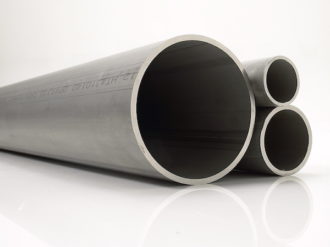
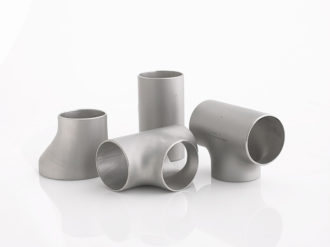
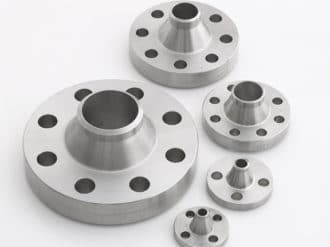
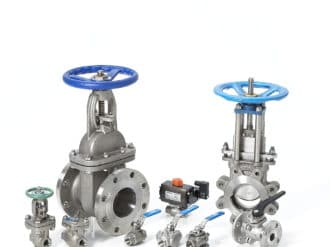
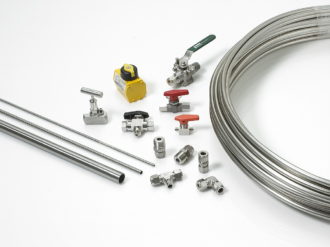
The product families below cover the majority of Chemical & Food Processing requirements. Each category page has full stocking programme details, available grades, and dimensional data.
Ready to Order or Need Help Sizing?
Our technical sales team can help you select the right size, material, and configuration for your application.